Short answer
If your brick has never been painted and it's sound, usually don't paint it: clean it, repoint it and paint the trim. If it's already painted, keep it painted with a breathable masonry coating. Fix any moisture first. In a Denver landmark or historic district, check with Landmark Preservation before painting unpainted brick. Angi puts brick painting in Denver at $1.55 to $4.60 per sq ft.
Why are so many Denver houses brick?
Because of a fire. Early on April 19, 1863, a fire started in downtown Denver and burned through the mostly wooden business district. The Denver Public Library's history of the Great Fire describes a town that rebuilt in brick. The city passed an ordinance requiring new buildings to be brick or stone. The area had plenty of clay, so brick became the default. Colorado Public Radio, quoting a library archivist, reported the rule stayed on the books until around 1960.
The result is still on every block. Data from Denver's Department of Finance, reported in 2025, shows that almost 53% of the city's residential properties are brick or clad in brick. Bungalows in Washington Park, Tudors in Park Hill, foursquares in Capitol Hill, post-war ranches in Harvey Park: much of Denver's housing stock is masonry. So the question we hear most from brick-home owners isn't what color to choose. It's whether to paint at all.
Should you paint a brick house in Denver?
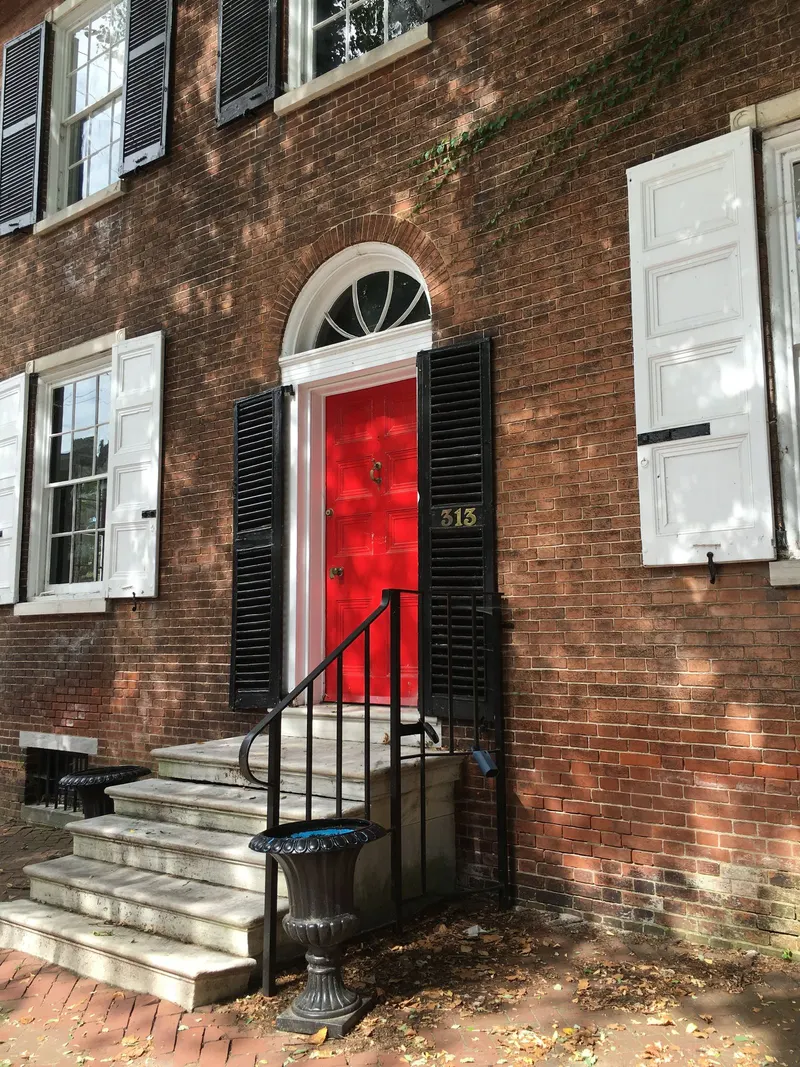
Usually not, if it has never been painted. Usually yes, if it already is. That's the honest short version, and here's why.
Unpainted brick takes almost no upkeep. A fired clay brick has a hard outer face that sheds water. Some moisture always gets into a masonry wall, and bare brick lets it dry back out through the face and the mortar joints. Put the wrong coating over it and that drying slows down. Water that can't get out freezes in the brick. Denver goes through freeze-thaw cycles all winter (our Denver painting data page has the NOAA freeze counts), and every cycle pushes on the trapped water until the face of the brick pops off. Masons call that spalling, and you can't paint it away.
Once brick is painted, though, getting back to bare brick is expensive and hard on the masonry. The Brick Industry Association's older guidance on painting brick warned that painted exterior masonry needs repainting every three to five years. Modern masonry coatings do better than that, but painted brick never goes back to zero maintenance. That's the real trade: color now, in exchange for a coating you'll maintain for as long as you own the house.
| Your brick | Our usual advice | Why |
|---|---|---|
| Never painted, in good shape | Leave it. Clean it, repoint failing mortar, and paint the trim. | Lowest maintenance there is. Painting it starts a repaint cycle you can't easily undo. |
| Never painted, but you hate the color | Consider limewash or a masonry stain before paint. | Both change the look while letting the wall breathe. Stain keeps the texture; limewash wears gracefully. |
| Already painted, sound | Repaint with a breathable masonry coating. | Stripping is costly and can damage the face. Keep the coating in good shape. |
| Already painted, peeling or blistering | Find the water first, then remove loose paint and recoat. | Peeling paint on brick is almost always moisture coming from behind or from the top of the wall. |
| White powder (efflorescence) or crumbling faces | Don't coat it yet. Fix gutters, grading, caps and mortar. | Those salts are water moving through the wall. A coating traps it and makes the damage worse. |
Can you paint brick in a Denver historic district?
Check before you buy a gallon. Denver's design guidelines for landmark structures and historic districts cover individually designated landmarks and every historic district except Lower Downtown, which has its own guidelines. The updated guidelines, adopted by the Landmark Preservation Commission in February 2026, tell owners to keep masonry's original protective surface and not to paint masonry that was never painted. If your house is a designated landmark or sits in one of Denver's historic districts, talk to Denver Landmark Preservation before you change unpainted brick. Repainting brick that's already painted is a different conversation from painting it for the first time, and staff can tell you which applies to you.
HOAs are the other gatekeeper. Many newer communities treat brick wainscots and accents as part of the approved exterior and won't let you paint them. Our HOA paint approval guide has a request-letter tool if you need to ask.
Paint, limewash or stain: what are the options for brick?
There are four ways to change how a brick house looks, and they behave very differently over time.
- Masonry paint (breathable acrylic). A full, opaque color change. Use a coating made for masonry and rated vapor-permeable, over a masonry primer where the label calls for one. Don't use ordinary house paint, and never use a non-breathable elastomeric on brick that gets wet from behind. It's the most dramatic change and the most maintenance.
- Mineral (silicate) paint. It soaks into the masonry instead of sitting on top, so it stays very breathable and holds its color well in strong sun. It only bonds to bare or mineral surfaces, so it's for unpainted brick or brick stripped back to clean masonry.
- Limewash. Lime and pigment brushed on, often washed back for an aged look. Very breathable, and it fades and wears unevenly over the years, which is the point. Expect to refresh it rather than repaint it.
- Masonry stain. Penetrating and translucent to semi-solid. It shifts the color of red or orange brick toward brown, gray or charcoal and keeps the texture and the mortar lines. It's the most reversible-looking choice and the lowest maintenance of the four.
Whichever you choose, the prep is the same. Wash with a masonry-safe cleaner, not an acid wash (brick makers warn that acidic cleaners cause paint failures). Let the wall dry fully. Repoint open mortar joints. Fix the water sources first: gutters, downspouts, sprinklers aimed at the wall, missing caps on top of walls and chimneys. New masonry, such as a fresh repair or an addition, needs to cure first. One brick maker's painting guide recommends at least 30 days, then a check for moisture or efflorescence.
Quick check: what should you do with your brick?
What does it cost to paint a brick house in Denver?
Angi's Denver exterior painting data puts brick at $1.55 to $4.60 per square foot, the widest range of any siding it lists. That's because brick drinks paint and takes longer to cut in around mortar joints. Stripping old paint, where it's needed, runs $0.50 to $2.05 per square foot on top. On a typical one-story Denver brick ranch with about 1,300 sq ft of masonry wall, that's roughly $2,000 to $6,000 to paint before any repointing, and far more if the old paint has to come off. A masonry stain or limewash on bare brick usually lands lower than full paint, because there's no primer and a single application often does it.
For the rest of the house (trim, soffits, doors, gutters), see our Denver painting cost guide. It now has a table by house size. If your brick shares the wall with stucco or siding, our exterior painting page covers how we sequence mixed-material houses.
The mistakes we fix most on painted brick
- Painting over efflorescence. The salts keep coming and push the paint off from behind within a season or two.
- Non-breathable paint or elastomeric on a wet wall. It blisters, then peels in sheets, and sometimes takes the face of the brick with it.
- Skipping the repointing. Paint doesn't fix open joints. Water gets in behind the paint, and the paint fails along every joint line.
- Pressure washing at close range. It cuts into soft mortar and old brick faces and drives water deep into the wall right before painting.
- Painting too late in the year. Masonry stays cold and holds moisture. Brick should be dry and above the coating's label minimum temperature, and it should stay that way while the coating cures.
The bottom line
Denver is a brick city because of an 1863 fire, and most of that brick is happiest left alone. If yours is bare and sound, clean it, repoint it and paint the trim. If it's already painted, keep it painted with a breathable masonry coating, and fix the water before you recoat. And if you're in a historic district, call Landmark Preservation first. For a second opinion on your wall, send photos or book a walkthrough, whichever you prefer, or call 720-208-5645.

Written by Denver Paint Contractors. Painting contractors serving Denver and the Front Range with over 20 years of experience, full insurance and a 5-year workmanship warranty. About us or call 720-208-5645.
Sources
Every number in this guide comes from the source listed. Checked October 25, 2026.
- Downtown Denver burns to the ground: the Great Fire of 1863, Denver Public Library Special Collections.
- Denver's brick legacy is rooted in a fire, Colorado Public Radio, July 1, 2019.
- Fact brief: share of Denver residential properties made of or clad in brick, Gigafact, citing Denver Department of Finance data, May 2, 2025.
- Landmark Preservation Design Guidelines (updates adopted February 17, 2026), City and County of Denver, Community Planning and Development.
- Technical Note 6: Changing the Appearance of Brick Masonry (August 2024) and the earlier Painting Brick Masonry edition, Brick Industry Association.
- Painting brick: masonry builder guide, General Shale, 2020.
- Cost to paint the exterior of a house in Denver, CO (siding table: brick; paint stripping), Angi, updated November 13, 2025.